
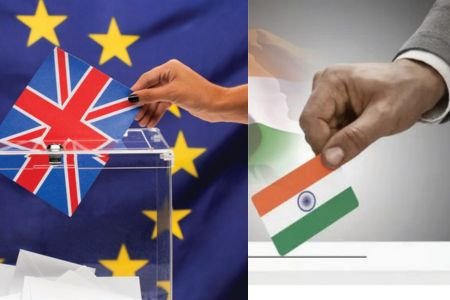
The electoral process in Asia and Europe is as exciting as in the US or, for that matter, in any part of the world. All countries need to allow their people to choose the people and party they wish to be governed by, at least in countries with a constitution that prescribes Democracy as the form of government they would like to be governed. Over the years, different ideologies have garnered support, and they compete. It is a fascinating process, one that gives hope to humanity.
The UK and India had their elections in 2024, and people made their mandate clear in response to the options the political parties contesting in the polls offered. In 2024, the Indian Democracy and Indian elections have again done the magic. The great Indian voters, irrespective of their caste, creed, religion, socio-economic and educational background have done it once again. The real winner, indeed is the Indian voter. The collective efforts of voters, political parties, candidates, election personnel and security forces during polling have strengthened Indian Democracy, deserving great respect and appreciation. The people of India have kept the wheels of Democracy spinning.
India conducted the Election Visitors’ Programme (IEVP)and 75 delegates representing various Election Management Bodies (EMBs) and organisations from 23 countries namely – Bhutan, Mongolia, Australia, Madagascar, Fiji, Kyrgyz Republic, Russia, Moldova, Tunisia, Seychelles, Cambodia, Nepal, Philippines, Sri Lanka, Zimbabwe, Bangladesh, Kazakhstan, Georgia, Chile, Uzbekistan, Maldives, Papua New Guinea and Namibia will take part in the event. Members from the International Foundation for Electoral Systems (IFES) and media teams from Bhutan and Israel will also participate.
In 2024, the EMBs visited six states— Maharashtra, Goa, Gujarat, Karnataka, Madhya Pradesh, and Uttar Pradesh— in small groups to observe polls and related preparedness in various constituencies.
UK Elections
The world closely watched the elections in the UK. Tradition and politics were perhaps tested and challenged by the UK voters, probably for the first time since Democracy was introduced in the UK.
The results were unimportant since either the Labour or Conservative party-led government would have been responsible for managing the country’s affairs. But the beauty was in the way the elections were fought. It was perhaps the best demonstration of how free and fair elections are critical for Democracy. The smooth transition of power was another hallmark of a beautiful democratic process, where both the winner and vanquished focus on the development and progress of the country as their priority.
According to a PDF posted on the website:https://assets-learning.parliament.uk :How-it-Worksbooklet: The UK is made up of four countries, England, Scotland, Wales and Northern Ireland, each with their own history and culture. The balance of power between these countries has often been the subject of fierce debate and has changed from time to time. It further explains that local councillors, MPs and other public figures, such as mayors, all represent you and your interests. If you live in Scotland, Wales or Northern Ireland, you will also be represented within the devolved bodies which govern significant elements of your lives in these places. Voting in elections gives you the chance to have a say on who represents you locally, regionally and nationally. But, the systems through which these representatives are chosen can vary, which can affect election outcomes.
Capturing the power of Democracy and the evolution of Parliament proceedings, which is the core of any democracy, the UK Parliament website has some interesting nuggets of how paintings and novels helped inspire people to cherish Democracy.
Before the late 19th century, there was no official record of what took place in Parliament, although national, regional and local newspapers covered Parliament’s proceedings in detail. Charles Dickens was a parliamentary reporter in his youth before he embarked on his novels.
This coverage meant people could keep themselves informed about parliamentary events although they may have been unable to vote. For those who were entitled to the vote, parliamentary elections could be turbulent and lively, sometimes even violent.
In 1754, the artist William Hogarth worked on a quartet of paintings depicting an election in a country town. Men are shown being dragged to the polling booth, and bribes are made. The winning candidate’s parade is violently interrupted.
Some things have changed in the evolution of Democracy through elections—both in the UK and India. For better and worse, some of the developments in the evolution of Democracy are being watched and pruned by the people themselves. That is the power of people, by the people and for the people.