
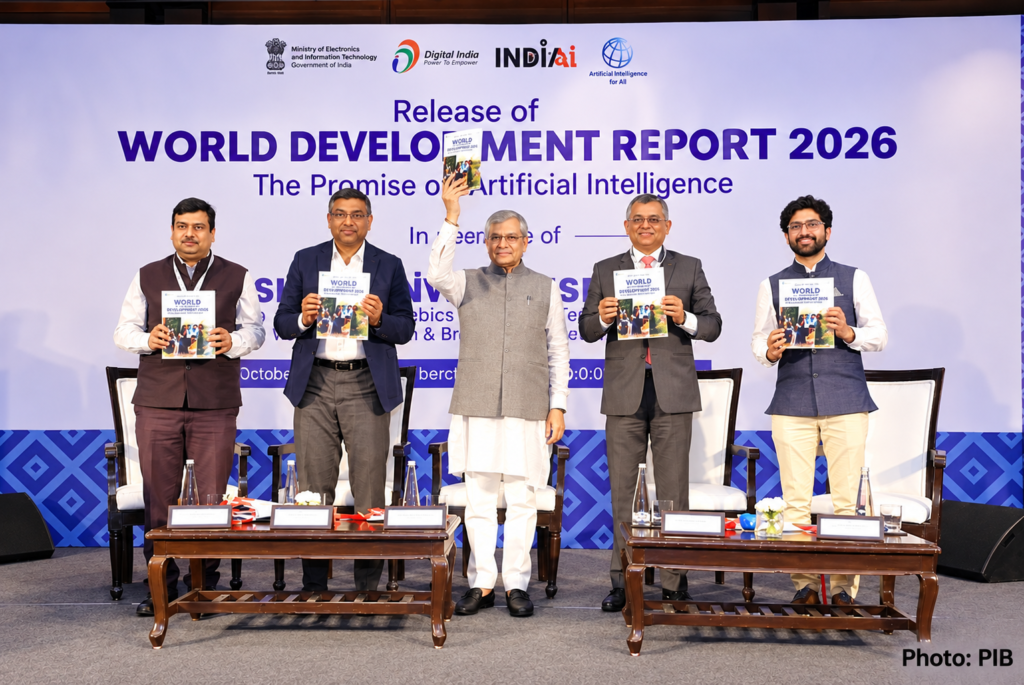
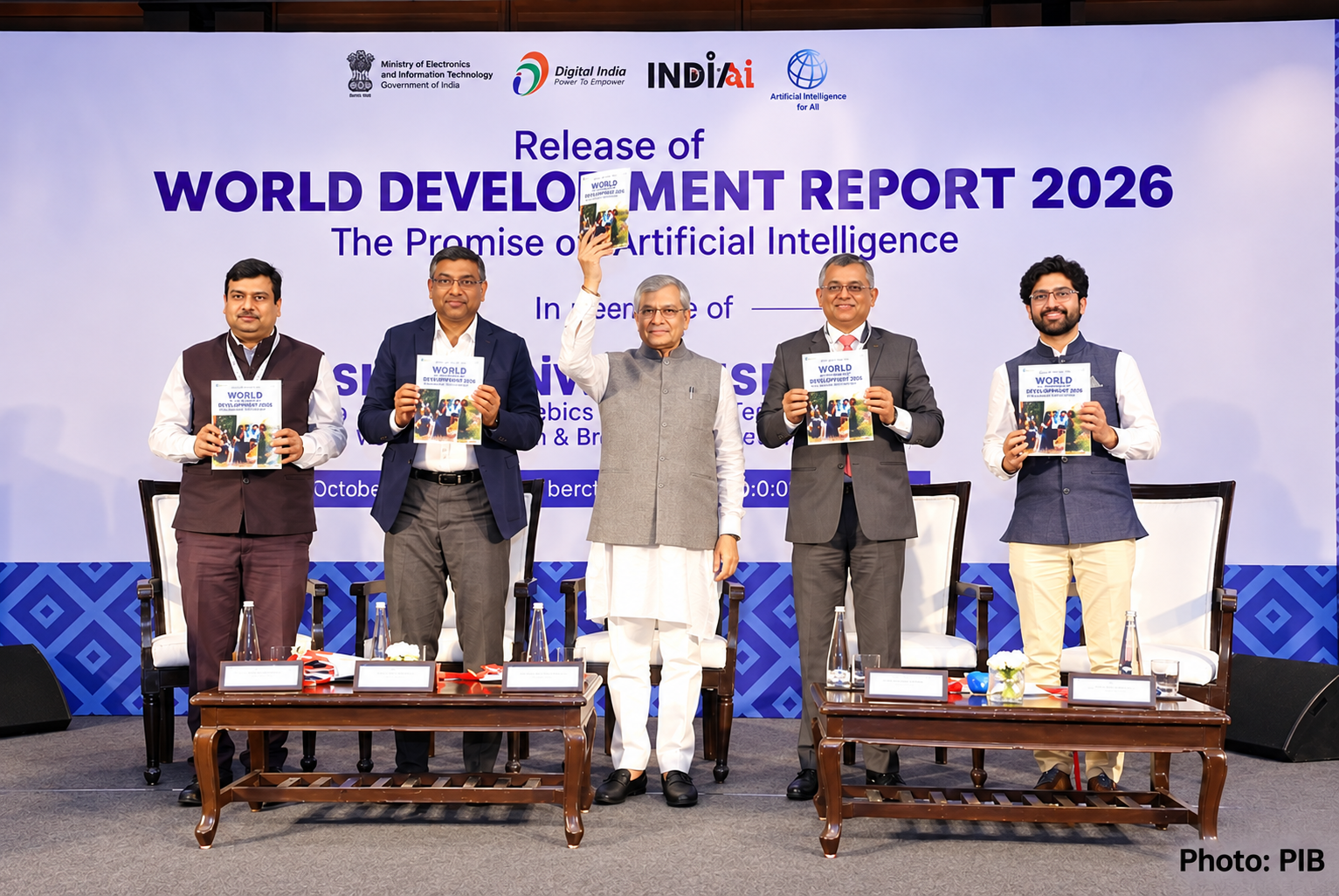
Artificial Intelligence (AI) is improving agricultural productivity and healthcare outcomes, increasing sugarcane yields by 40 per cent while reducing water and fertiliser use by 30 per cent in Baramati, Maharashtra, Union Minister Ashwini Vaishnaw said on Thursday.
Speaking at the launch of the World Bank Group’s World Development Report 2026: The Promise of Artificial Intelligence in New Delhi, he also cited a 35 per cent increase in tuberculosis (TB) detection through AI-enabled solutions.
The event was organised by the IndiaAI Mission under the Ministry of Electronics and Information Technology (MeitY), in collaboration with the World Bank Group. Vaishnaw highlighted India’s focus on democratising technology to ensure AI benefits reach citizens, businesses and institutions.
The Baramati initiative uses satellite, Internet of Things (IoT) and weather data to provide actionable agricultural advice to farmers through voice-based mobile services. The Minister also said Gujarat’s AgriStack initiative was being used by around five lakh farmers, while AI-based animal-health solutions through Sarlaben were benefiting approximately three crore cattle and their farmers.
The report explores how developing economies can harness AI through adoption, adaptation and advancement. It highlights the technology’s potential to improve productivity and public services, while emphasising the importance of reliable electricity, connectivity, computing infrastructure, quality data, skills and strong institutions.
World Bank Group’s Chief Economist Michael Kremer highlighted India’s AI-based monsoon forecasting as an example of technology delivering development benefits at scale. The initiative provides weather forecasts to millions of farmers through text messages, voice services and AI-powered advisories.
The IndiaAI Mission is building an integrated AI ecosystem across seven pillars, including computing capacity, indigenous foundation models, datasets, skills, startup financing and safe and trusted AI.
The event also featured a State AI Showcase, presenting AI applications in agriculture, education, child development and healthcare from states including Andhra Pradesh, Maharashtra and Meghalaya.